
Mon-Fri | : 9:00am - 1:00pm 2:00pm - 5:00pm |
Sat | : 9:00am - 12:00pm |
Sun/PH | : Closed |
2:00pm - 5:00pm







Kidney Cancer Stages Explained: What Each Stage Means


Kidney cancer often develops in the shadows, progressing silently without the warning signs of pain or visible symptoms that patients typically expect. In many instances, a diagnosis only comes to light incidentally during routine health screenings for unrelated issues. Because these early stages are so inconspicuous, clinical staging becomes the vital first step in providing the clarity needed to navigate a path forward.
However, understanding the intricate clinical classifications requires a consultation with a specialist to interpret complex diagnostic data with precision. Through prioritising early intervention and working closely with a kidney expert, you can ensure that your diagnosis is met with the most effective clinical expertise, allowing you to start your journey towards a successful recovery as soon as possible.
The Importance of Accurate Staging
Staging serves as the definitive clinical roadmap for kidney cancer management. For instance, it’s the primary factor in determining the surgical strategy, specifically whether a patient is suitable for a partial nephrectomy to preserve renal function or requires a radical nephrectomy for more extensive disease.
Staging is established using the TNM framework, which provides a standardised clinical language to categorise the progression of the condition:
- T (Tumour): Measures the size of the primary mass and evaluates if it remains contained within the kidney or has breached the capsule.
- N (Nodes): Assesses the regional lymphatic system to identify any local spread beyond the organ.
- M (Metastasis): Determines if the cancer has reached distant sites, such as the lungs or bones, which shifts the treatment focus.
Understanding the 4 Stages of Kidney Cancer
Kidney cancer is categorised into four distinct stages based on the growth and spread of the primary tumour. These classifications allow the clinical team to determine the severity of the condition and select the most effective treatment path for the patient:
- Stage 1: Small and Contained—The tumour is 7cm or smaller and restricted entirely to the kidney. Because the cancer has not spread, this stage offers the highest cure rates through targeted surgical intervention.
- Stage 2: Locally Confined but Larger—The tumour exceeds 7cm in diameter but remains within the kidney's boundaries. While the mass is larger than in Stage 1, it has not yet invaded the lymph nodes or distant organs.
- Stage 3: Locally Advanced—The cancer has extended beyond the kidney into major veins—such as the renal vein or vena cava—or reached regional lymph nodes. This stage requires more complex surgical techniques to address vascular involvement.
- Stage 4: Metastatic—This is the most advanced stage, where the cancer has spread beyond the immediate vicinity to the adrenal glands or distant sites like the lungs or bones. Treatment focus shifts toward systemic management to control the disease.
Surgical Treatment Options
Surgery remains the primary intervention for kidney cancer that’s confined to the organ or the immediate surrounding area. The objective is to remove the malignant tissue while ensuring the patient maintains optimal long-term health:
- Partial Nephrectomy (Nephron-Sparing): This procedure involves removing the tumour while preserving as much healthy kidney tissue as possible. It’s considered the gold standard for Stage 1 cases because it maintains renal function and reduces the risk of chronic kidney disease.
- Radical Nephrectomy: This is the complete removal of the kidney, typically required for larger Stage 2 or Stage 3 tumours. It’s a necessary approach when the mass is too large or centrally located to allow for a partial removal without leaving cancer cells behind.
- The Robotic Advantage: Utilising the da Vinci Surgical System allows these operations to be performed with extreme precision. This robotic-assisted approach involves 0.5cm incisions, leading to minimal blood loss and a significantly faster recovery compared to traditional open surgery.
Non-Surgical & Systemic Treatments
For patients where surgery is not the primary option, non-surgical interventions provide essential pathways for managing the disease. These treatments focus on controlling the growth of the cancer and maintaining the patient's quality of life:
- Targeted Therapy & Immunotherapy: These are the primary approaches for Stage 4 kidney cancer. These advanced drugs work by empowering the immune system to identify and destroy cancer cells throughout the body or by blocking the specific signals that allow tumours to develop blood vessels and grow.
- Ablative Therapies: These techniques involve the direct destruction of small tumours without traditional surgery. Cryotherapy uses extreme cold to freeze and kill malignant cells, while Radiofrequency Ablation (RFA) uses targeted heat to achieve the same result, typically for patients who are not suitable for a surgical procedure.
- Active Surveillance: In specific cases involving small, slow-growing tumours in elderly or high-risk patients, a monitored watchful waiting approach may be the safest clinical path. This involves regular diagnostic imaging to ensure the tumour remains stable, deferring invasive intervention unless the condition progresses.
Managing Your Health Post-Diagnosis
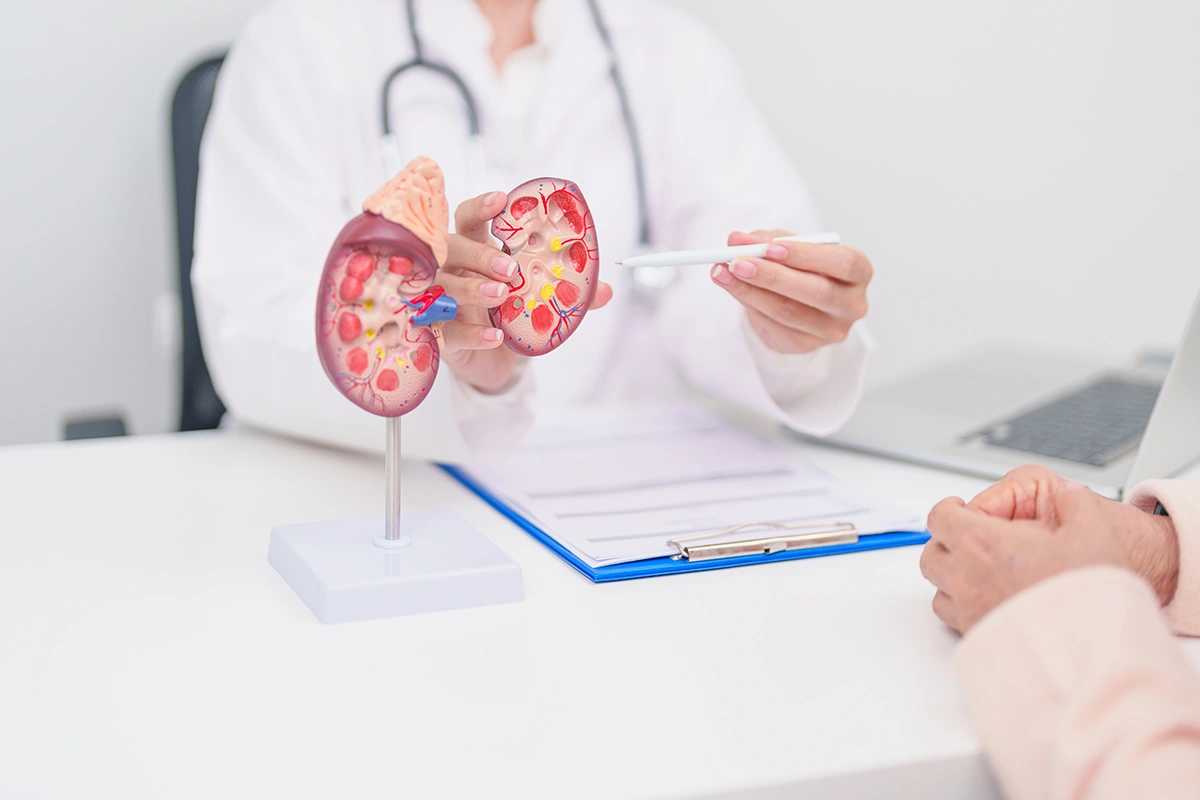
Recovery and long-term health management are as critical as the initial treatment phase. Patients must take proactive steps to protect their remaining renal function and monitor for any clinical changes. These proactive steps include:
- Monitoring After Treatment: Regular follow-up scans and surveillance are essential for at least five years to ensure the cancer remains in remission. This consistent monitoring allows the clinical team to identify any potential recurrence early and intervene promptly with modern therapies.
- Managing Systemic Therapy Side Effects: Patients undergoing immunotherapy or targeted treatments should work closely with their care team to manage common side effects such as fatigue or skin changes. Early identification and supportive care can significantly improve quality of life during the course of medication.
- Kidney-Friendly Lifestyle: Adopting a renal-protective lifestyle is universal, regardless of the treatment path. Diligent blood pressure management, consistent hydration, and a balanced diet are key to ensuring the remaining kidney tissue is not under undue stress.
Experience Specialist Kidney Care With Dr Michael Wong
Understanding the staging and clinical framework of kidney cancer is the first step toward reclaiming your health. Whether managing a small, contained tumour through nephron-sparing surgery or navigating a more complex metastatic diagnosis, the path to recovery relies on diagnostic precision and a tailored treatment strategy.
At the International Urology, Fertility and Gynaecology Centre, we prioritise early intervention and advanced surgical techniques to ensure the best possible clinical outcomes. Under the leadership of Dr Michael Wong, our clinic provides comprehensive care that balances cancer clearance with the preservation of long-term renal function.
If you’ve received an incidental finding or are experiencing symptoms that require a specialist's evaluation, do not delay your consultation. Book an appointment with our clinic today to discuss your diagnosis and explore the most effective treatment options for your specific needs.
Frequently Asked Questions (FAQs) About Kidney Cancer

Dr Michael YC Wong
Medical Director & Senior Consultant Urologist
FAMS (Urology), FICS (USA), FRCS (Edinburgh),
M Med (Surgery), MBBS (S’pore)
Dr Michael Wong is the medical director and senior consultant urologist at the International Urology, Fertility and Gynaecology Centre, Mount Elizabeth Medical Centre. He has completed specialised training in urology, fertility and minimally invasive surgery at established centres in the USA.
Dr Wong is the only urologist from ASEAN elected to the Board of Directors of the Endourological Society and World Congress of Endourology, recognising his global leadership in endourology. He also serves as the only Asian urologist appointed Co-Chairman of the WHO’s International Consultation on Stone Diseases, where he contributes to setting global guidelines for kidney stone management.
Let us help you
Restore your urological health.
Make an appointment with Dr Michael Wong to receive a tailored, supportive and targeted care plan.
Office
Location
3 Mount Elizabeth Road, #10-09,
Mount Elizabeth Medical Centre,
Singapore 228510
Contact
Number
Email
Address
Opening
Hours